Thinking about getting a new ear piercing but feeling overwhelmed by all the names, styles, and aftercare rules? You’re not alone. From lobes to helix piercings, and from closure systems to the right materials, there’s a lot to learn before making the first move.
The truth is, choosing the wrong piercing type, jewelry, or even aftercare method can lead to irritation, slow healing, or permanent damage. That’s why it’s important to understand where you’re getting pierced, what you’re putting in your ear, and how to care for it afterwards.
In this guide, we’ll break everything down into simple terms, covering different types of ear piercing, pain levels, healing times, and the safest jewelry options. Whether you want a single stud or a curated ear full of sparkle, you’ll have to know how to make the right choice and enjoy your piercing for years to come.
What Are the Various Types of Ear Piercings?
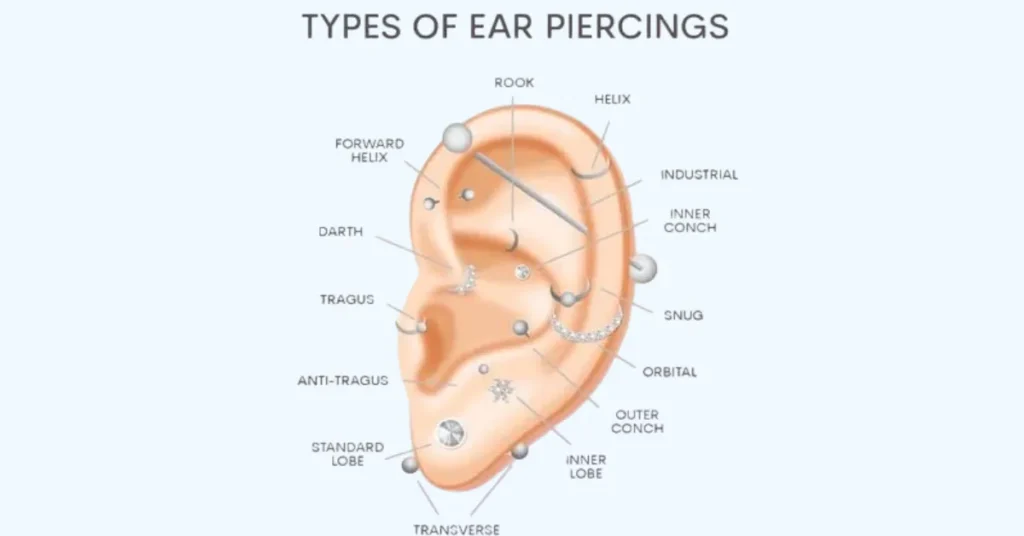
Ear piercings types come in many styles, each with a unique placement and look. Here are the most popular types:
Standard Lobe
The most common piercing, placed at the center of the earlobe. It’s quick to heal and works with almost any jewelry.
Transverse Lobe
A barbell runs horizontally through the lobe instead of front-to-back, giving a unique look.
Stacked Lobe
Two or more piercings placed vertically on the lobe for a layered style.
High-Lobe
Placed higher on the lobe, near the cartilage, for a modern and edgy.
Helix
Piercing on the higher outer edge of the ear’s cartilage. It’s stylish, flexible, and works well with hoops or studs.
Forward Helix
Located on the front cartilage rim near the face. Often worn with small studs, and you can get multiple for a stacked effect.
Mid-Helix / Auricle
Sits between the upper and lower helix, right along the outer edge. Works great for hoops and dainty studs.
Flat
Piercing on the flat area of cartilage inside the upper ear. Ideal for trendy, decorative studs.
Rook
Located in the inner ridge of cartilage above the daith. Gives a bold, unique look and often uses curved barbells.
Snug
Pierced through the inner ridge of cartilage halfway down the ear. Known for its edgy look but can be more painful.
Daith
Passes through the bend of cartilage just over the ear canal. Often linked (unofficially) to migraine relief and looks great with hoops.
Tragus
The small folding of cartilage covering the ear canal. Works well with studs or tiny hoops for a subtle style.
Anti-Tragus
Pierced through the cartilage opposite the tragus, just above the earlobe. Works well with small hoops or studs.
Conch (Inner And Outer)
A conch piercing is done in the base “bowl” of your ear. There are two types: inner conch (near to the ear canal) and outer conch (near to the edge). Both allow for bold jewelry styles like hoops or flat-back studs.
- Inner Conch – Pierced through the flat cartilage inside the ear, great for studs.
- Outer Conch – Located toward the rim of the ear, perfect for larger hoops.
Industrial
A long barbell that attach two piercings (usually through the upper ear cartilage), giving a bold, statement look.
Orbital
Two piercings connected by a single hoop, often placed in the lobe or cartilage for a unique looped look.
Contra-Conch
Similar to the outer conch but placed slightly differently in the ear’s cartilage for a distinct style.
Hidden Rook
A variation of the rook piercing that sits deeper in the fold, making it more subtle and less visible from the front.
Hidden Helix
A helix piercing positioned deeper or under the hairline, making it less noticeable but still stylish.
Spider Bite
Two closely placed piercings on the lower lip, usually on one side, creating a bold and edgy look.

Common Piercing Locations – Which One Is Right for You?
Lobe
The lobe piercing is the most common and beginner-friendly option. It’s done on the soft lower part of the ear, heals quickly, and suits almost any jewelry style.
Helix
A helix piercing is set on the outer top cartilage of the ear. It’s a stylish choice that works well with hoops or studs, but it takes longer to heal than lobe piercings.
Forward Helix
A forward helix piercing is placed on the front part of the upper ear’s cartilage rim, near where your ear connects to your head. It’s a trendy spot that works well for stacking multiple piercings.
Rook
A rook piercing goes through the inner ridge of cartilage between your ear’s inner and outer parts. It has a bold look and is often styled with small curved barbells.
Daith
A daith piercing is positioned through the small bend of cartilage just above your ear canal. It creates a unique, tucked-in look and is often worn with small hoops or clicker rings. Some people also believe it may help with migraines, though research is limited.
Tragus Piercing
A tragus piercing goes through the small cartilage flap right in front of your ear canal. It’s trendy because it’s subtle yet stylish, and it works well with studs or small hoops.
Septum
A septum piercing is placed through the thin piece of skin between your nostrils. It’s popular for its versatility; you can flip the jewelry up to hide it or wear bold rings for a statement look.
What Are the Different Closure Systems for Piercings?
Closure systems are the ways jewelry stays secure in your piercing. Common types include internal threading, external threading, push pin backs, and clicker rings. Each has its own pros, internal threading is safer for healing, push pins are easy to use, and clickers are quick to open and close for hoops.
Internal Threading
Internal threading means the screw part is inside the jewelry post, so it doesn’t scrape your skin when inserted. This makes it safer for new piercings and reduces irritation during healing.
Push Pin Earring
A push pin earring has a flat back and a pin that gently pushes into place. It’s easy to insert, comfortable to wear, and perfect for piercings that need gentle handling.
External Threading
This is an older jewelry style where the screw threads are on the post and go through the piercing. It’s less gentle on healing skin, so it’s not recommended for fresh piercings, but still used in some jewelry types.
Clicker Rings
A hoop-style jewelry with a hinged segment that “clicks” shut. They’re popular for their ease of use, secure fit, and clean look, making them great for septum, daith, and cartilage piercings.
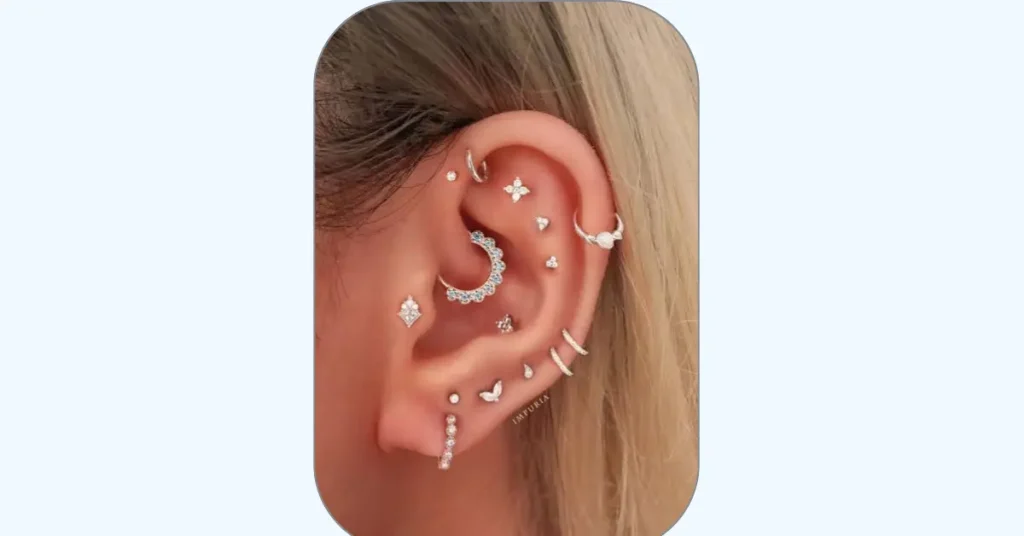
What Materials Are Best for Piercing Jewelry?
The best materials for piercing jewelry are implant-grade titanium, surgical stainless steel, niobium, and 14k or higher solid gold. These materials are hypoallergenic, safe for sensitive skin, and resist tarnish or corrosion. Avoid low-quality metals and plated jewelry, as they can cause irritation or allergic reactions, especially in fresh piercings.
Surgical Steel
Durable, affordable, and widely used for piercings. Choose implant-grade (like 316L) for safety and reduced risk of irritation.
Titanium
Lightweight, hypoallergenic, and corrosion-resistant. Ideal for people with sensitive skin or metal allergies.
Gold (14k And 18k)
Luxurious and safe if solid (not plated). Higher karat gold is softer, so 14k is usually best for everyday wear.
Platinum
Premium, hypoallergenic, and extremely durable. It won’t tarnish, making it perfect for long-term wear.
Bioplast / PTFE
Flexible, lightweight, and great for reducing pressure during healing. Popular for people with active lifestyles or medical needs.
Niobium
Hypoallergenic, corrosion-resistant, and comes in vibrant anodised colors. A good alternative to titanium for sensitive skin.
What Is the Size Guide for Threaded Studs?
The size of threaded studs depends on three main factors: gauge (thickness), length, and thread type.
- Gauge – For ear piercings, common sizes are 16G (1.2mm) and 14G (1.6mm). Smaller gauges mean thinner jewelry.
- Length – Measured between the two ends of the jewelry. It should be long enough to allow for swelling during healing.
- Thread Type – Internal threading is safer for new piercings, while external threading is more common in older jewelry styles.
Choosing the right size helps avoid irritation, pressure, and prolonged healing.
How Long Do Ear Piercings Take to Heal and How to Care for Them?
The healing time for types of ear piercings depends on the location and your aftercare routine.
| Ear Piercing Names | Average Healing Time | Notes |
| Lobe | 6–8 weeks | Fastest healing; beginner-friendly |
| Transverse Lobe | 2–3 months | Slightly longer than standard lobe |
| High-Lobe | 2–3 months | Avoid pressure from headphones |
| Helix | 6–12 months | Cartilage heals slowly |
| Forward Helix | 6–12 months | Avoid snagging on hair or masks |
| Mid-Helix / Auricle | 6–12 months | Clean both front and back |
| Flat | 6–12 months | Minimal movement helps healing |
| Rook | 6–12 months | Inner cartilage; extra care needed |
| Snug | 8–12 months | Prone to swelling |
| Daith | 6–9 months | May reduce migraines for some |
| Tragus | 6–12 months | Keep earbuds clean if used |
| Anti-Tragus | 9–12 months | Sensitive to pressure |
| Conch (Inner & Outer) | 6–12 months | Avoid ear cuffs early on |
| Industrial | 9–12+ months | Two piercings connected by one barbell |
| Orbital | 6–12 months | Jewelry movement can slow healing |
| Contraconch | 6–12 months | Similar care as conch |
| Hidden Rook | 6–12 months | Low visibility; still needs cleaning |
| Hidden Helix | 6–12 months | Avoid hair tangling |
| Spider Bite | 6–8 weeks | Two close piercings; heal like lobe |
Aftercare Tips:
- Clean the area two times a day with saline solution or aftercare spray.
- Keep away from touching with unwashed hands to prevent infection.
- Don’t change jewelry until fully healed.
- Avoid sleeping directly on the piercing to reduce irritation.
- Stay away from pools or hot tubs during early healing.
What Are the Best Earrings for Initial Piercings?
When getting a fresh piercing, your jewelry choice can make healing faster and more comfortable. The wrong material or style can cause irritation, infection, or even rejection. Here are the earring types and recommendations for you
| Earring Type | Why It’s Good for New Piercings | Best For | Extra Tip |
| Stud Earrings | Minimal movement, easy to clean, less likely to snag | Lobes, tragus, cartilage | Choose flat-back or threaded studs for extra comfort |
| Sleeper Hoops (Captive Bead Rings) | Smooth, rounded edges; allow swelling space | Helix, conch, daith | Pick seamless rings instead of ones with sharp hinges |
| Flat Back Labrets | Flat back reduces pressure on skin; secure fit | Cartilage piercings, piercings that touch pillows | Go for titanium or surgical steel for safety |
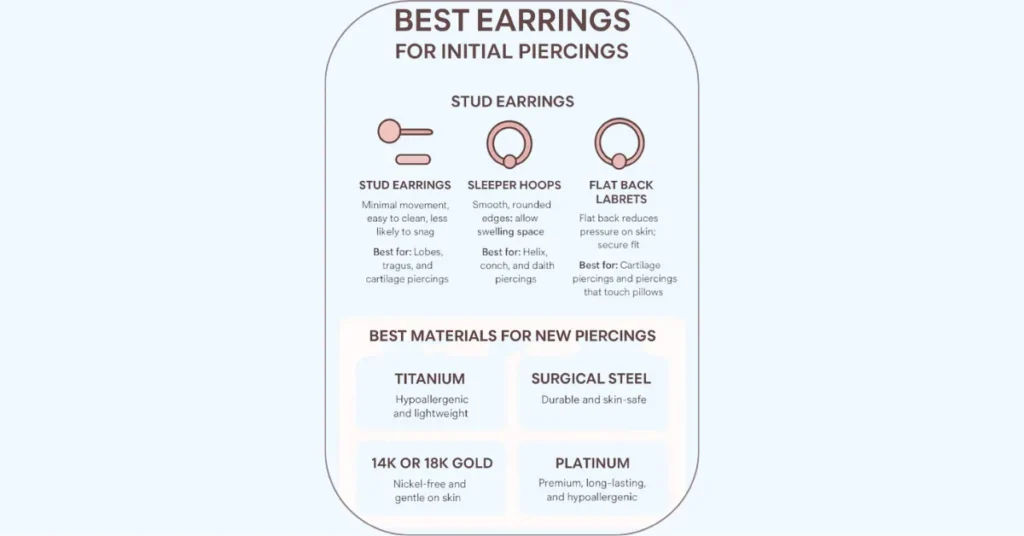
Best Materials for New Piercings
- Titanium – Hypoallergenic and lightweight.
- Surgical Steel – Durable and skin-safe.
- 14k or 18k Gold – Nickel-free and gentle on skin.
- Platinum – Premium, long-lasting, and hypoallergenic.
| Pro Tip: Avoid cheap costume jewelry, silver (tarnishes), and low-quality gold-plating in fresh piercings , they can cause irritation. |
Which type of Ear Piercings Hurt the Most?
Ear piercings vary in pain level depending on their location. On a general piercing pain scale, the lobe is the least painful (1–2/10) and is beginner-friendly. Helix, tragus, and rook piercings fall in the mid-range (4–6/10) due to cartilage thickness. Industrial and daith piercings are often rated higher (7–9/10) because they pass through multiple layers of cartilage.
However, pain isn’t the only concern. Piercings carry risks such as infection, keloids (raised scar tissue), and allergic reactions, especially if low-quality metals are used.
To reduce discomfort, choose an experienced piercer, use hypoallergenic jewelry like titanium or surgical steel, and follow aftercare instructions closely. Cleaning with a sterile saline solution and avoiding unnecessary touching will also help with healing and minimize pain.
How to Choose the Right Jewelry for Your Ear Piercing Type?
Choosing the right jewelry is more than just picking a pretty design; it’s about comfort, safety, and healing. Here’s how to make the best choice:
Pick Safe Materials
Go for titanium, surgical steel, 14k/18k gold, or platinum. These are hypoallergenic and reduce the risk of infection or allergic reactions. Avoid nickel-based metals, especially for fresh piercings.
- Cartilage (helix, rook, tragus): Flat-back studs or seamless rings for comfort.
- Lobe: Studs or small hoops are great for starters.
- Industrial: Straight barbells made from high-quality metal.
Choose the Right Size
Too tight can cause swelling and irritation, too loose can snag easily. Ask your piercer for the correct gauge and length based on your piercing type.
Think About Lifestyle
If you play sports or sleep on one side, choose low-profile designs to avoid pressure and snagging.
Prioritize Healing Over Style
During the healing phase, pick simple, smooth designs. Once healed, you can experiment with more decorative pieces.
What Are the Risks of Piercing?
Getting a piercing can be fun and stylish, but it’s important to know the possible risks so you can protect yourself. Here are the main ones:
- Infection – Bacteria can enter the piercing if tools aren’t sterilized or if you touch it with dirty hands. This can cause redness, swelling, pus, and pain.
- Allergic Reactions – Some people are allergic to nickel or other metals in jewelry. This can lead to itching, rash, or swelling.
- Keloids and Scarring – Certain skin types may form raised scars (keloids) around the piercing site, especially if the area gets irritated.
- Migration or Rejection – The body may push the jewelry out, causing the piercing to move or close. This is more common with surface piercings.
- Prolonged Healing or Swelling – Improper aftercare or constant irritation can delay healing and cause ongoing discomfort.
- Tearing or Trauma – Jewelry can get caught on clothing or hair, leading to accidental tearing of the skin.
| Tip: Always get pierced by a professional using sterile equipment, choose high-quality jewelry, and follow aftercare instructions closely. |
What Are Some Unique Ear Piercing Ideas?
If you want your different types of ear piercings to stand out, here are some creative and stylish options to inspire you:
- Stacked Lobe Piercings – Multiple studs or hoops lined vertically along the lobe for a layered, trendy look.
- Double or Triple Forward Helix – Two or three tiny studs on the front curve of the upper ear, giving a delicate but bold style.
- Orbital Piercing – A single hoop connecting two piercings in the same area—great for lobes or helix.
- Constellation Piercings – Small studs arranged in a pattern to resemble stars in the sky.
- Industrial with Charms – A barbell across the ear with decorative or dangling charms for a statement look.
- Hidden Rook or Helix – Subtle placements tucked inside folds of the ear for a secret, minimalist vibe.
- Spider Bite Piercings – Two closely spaced piercings, usually on the lobe, for a bold, edgy effect.
| Style Tip: Mixing metals, gemstones, and shapes can make even common piercings look unique and personal. |
Piercing Instruments VS Needles – Which One Is Better?
When it comes to getting a piercing, the tool used can make a big difference in healing and comfort.
Piercing Instruments (Piercing Gun)
- Pros: Quick, often available at jewelry shops, inexpensive.
- Cons: Can cause more tissue trauma, less precise, higher risk of infection. Not recommended for cartilage piercings.
Piercing Needles
- Pros: Cleaner cut, more accurate placement, less tissue damage, safer for all piercing types for the ear.
- Cons: Takes slightly longer, usually done only by professional piercers, and may cost more.
For better healing, less pain, and lower infection risk, professional piercing needles are generally the safer and more hygienic choice, especially for cartilage piercings.
How Should Multiple Piercings Be Spaced?
Getting multiple types of ear piercings can look stylish, but spacing matters for comfort, healing, and appearance.
General Rule
- Leave at least 6–8 mm (about a pencil’s width) between piercings.
- This prevents jewelry from overlapping and reduces irritation during healing.
Lobe Piercings
- You can place them closer together (5–6 mm) because lobes heal faster and are softer.
Cartilage Piercings
- Give more space, 8 –10 mm, to avoid swelling, overlap and pressure.
If Planning Future Piercings
- Ask your piercer to map them out so everything looks balanced in the long run.
| Tip: Always consider the type of jewelry you’ll wear; hoops need more room than studs. |
How to Clean Numerous Types Of Ear Piercing Jewelry Safely?
Keeping your ear piercing jewelry clean is very important for both safety and style. Always start by removing your jewelry carefully. Wash your hands with soap and water, then take it out gently to avoid hurting the piercing hole. Once removed, soak the jewelry in warm soapy water for 5–10 minutes.
Use mild, fragrance-free soap so it won’t damage the metal. After soaking, use a soft toothbrush to scrub away any buildup, paying extra attention to small areas like threads or clasps. Be gentle so you don’t scratch the jewelry.
Next, rinse the piece well with clean water to remove all soap, then pat it dry with a soft cloth, never use paper towels, as they can scratch. For a deeper clean, occasionally use a saline solution or a jewelry cleaning solution that is safe for your metal type. Avoid alcohol or harsh chemicals, especially on plated or delicate jewelry. A good habit is to clean your jewelry every one to two weeks if you wear it daily, and always remember, never put dirty jewelry back into your piercing.
Final Sparkle: Explore Your Perfect Ear Piercing Style
Ear piercings are more than just styling, they’re a way to express your personality. From simple lobes to bold industrials, there’s a style for everyone. Knowing the several types of ear piercings helps you choose the one that matches your vibe, comfort level, and healing needs. Whether you go for a subtle stud or a statement piece, make sure your choice feels as good as it looks.
FAQs About Multiple Types Of Ear Piercing
What’s the most painful piercing in your ear?
Cartilage piercings, like the rook or daith, are usually the most painful because the tissue is thicker. Earlobe piercings are the least painful.
What is the 2 3 rule for piercings?
The 2-3 rule means you should wait 2–3 months before changing jewelry in a new piercing. This helps the hole heal properly and reduces the risk of infection.
What is the most feminine ear piercing?
Many people see lobe piercings as the most feminine since they are simple and classic. Small hoops or studs on the lobe often give a soft, elegant look.
What are the different types of ear piercings?
There are many types like lobe, helix, tragus, conch, rook, and daith. Each piercing sits on a different part of the ear and has its own style.
What is the 3/2 piercing rule?
The 3/2 rule is a safe spacing guide. It means keeping at least 3mm to 2mm of space between piercings so the holes don’t overlap or cause irritation.
What is a smoke piercing?
A smoke piercing is another name for a “snug” piercing. It goes through the inner cartilage of the ear, making it unique but more painful to heal.
What does it mean when a woman has a right ear piercing?
Today, it usually doesn’t mean anything special, it’s just personal style. In the past, some people thought piercings on certain sides had meanings, but now it’s more about fashion.
Which ear piercing is easiest to heal?
Earlobe piercings heal the fastest because the tissue is soft and has good blood flow. They usually heal within 6–8 weeks.
What is the best piercing for beginners?
The earlobe piercing is the best choice for beginners. It’s simple, heals quickly, and is less painful compared to cartilage piercings.