When it comes to jewelry, the choice between stainless steel alloy and sterling silver can feel confusing. Both metals look stylish, both are popular, and both seem like a smart buy. But when you want jewelry that lasts, looks good, and matches your budget, the decision gets tricky.
Maybe you’re asking: Which one is stronger? Will it tarnish? Is it safe for sensitive skin? And most importantly, which one is worth my money? These are common questions many jewelry lovers face before making a purchase.
The good news? You don’t need to be a jeweler to understand the differences. In this guide, we’ll break down surgical stainless steel vs. sterling silver in simple words. You’ll learn about durability, appearance, cost, and even how they react over time. By the end, you’ll know exactly which metal suits your needs, whether it’s for daily wear, gifting, or special occasions.
What is Stainless Steel?
Stainless steel is a strong metal made by mixing iron with other elements, mainly chromium. Chromium is important because it forms a thin, invisible layer on the surface of the metal. This layer protects it from rust, stains, and corrosion. That’s why it’s called “stainless.”
Unlike regular steel, surgical steel does not easily tarnish or lose its shine. It stays bright and smooth for years, even when exposed to water, air, and daily use. This makes it a very popular choice not just for jewelry, but also for cutlery, kitchen tools, watches, and even medical equipment.
There are different grades of stainless steel, but the most common ones used in jewelry are 304 and 316L. The “L” in 316L stands for “low carbon,” which makes it more durable and resistant to scratches or rust. That’s why many high-quality jewelry pieces are made with 316L stainless steel.
In short, stainless steel is a modern, practical, and budget-friendly material. It combines toughness with a clean, shiny look that appeals to many people. If you want jewelry that can handle everyday wear without much care, rust-resistant steel is an excellent choice.
What Are The Pros And Cons Of Stainless Steel?
There are some pros and cons of every metal, and corrosion-resistant metal also has them. Let’s dive into the details to understand it better.
What Are The Pros of Stainless Steel Jewelry?
Stainless steel has become one of the most popular metals for chains, rings bracelets and everyday items. Here are the main benefits that make it stand out:
1. Extremely Durable
Stainless steel is tough and long-lasting. It doesn’t bend, scratch, or break easily, which makes it perfect for daily wear jewelry like rings, bracelets, and watches.
2. Resistant to Rust and Tarnish
Thanks to its chromium layer, steel alloy does not rust or tarnish the way other metals do. This means your jewelry stays shiny and clean with very little effort.
3. Low Maintenance
Unlike sterling silver, stainless steel does not require constant polishing. A simple wipe with a cloth or a quick wash with mild soap and water is enough to keep it looking new.
4. Hypoallergenic Options
High-quality grades like 316L chrome steel are safe for sensitive skin. They don’t cause irritation or allergies, making them a good choice for people who react to other metals.
5. Affordable
Stainless steel costs much less than precious metals like silver, gold, or platinum. You can get stylish and durable jewelry without spending too much money.
6. Modern Appearance
It has a sleek, modern, and polished look that appeals to both men and women. Stainless steel jewelry matches easily with different outfits and styles.
7. Eco-Friendly and Recyclable
Brushed stainless steel can be recycled, making it a more sustainable option compared to some other metals.
What Are The Cons of Stainless Steel?
While polished stainless steel has many benefits, it also comes with a few drawbacks you should know before buying: Stainless steel is practical and durable, but it may not be the best choice if you want prestige, resale value, or very fine detailing.
1. Less Valuable
Unlike sterling silver, stainless steel is not a precious metal. It has little to no resale value, so it’s not a good choice if you’re looking for an investment.
2. Limited Prestige
Tarnish-prone silver and gold are often linked with tradition, luxury, and gifting. Stainless steel doesn’t carry the same status or emotional value.
3. Can Be Heavy
Some stainless steel jewelry pieces, especially large rings or bracelets, can feel heavier compared to polished silver. This may be uncomfortable for long wear.
4. Hard to Resize or Repair
Because of its strength, stainless steel grade is difficult to cut, resize, or reshape. If your ring size changes or the piece needs repair, jewelers may struggle to work on it.
5. Limited Designs in Fine Jewelry
Although durable steel looks sleek, it doesn’t always have the same detailed, artistic designs that antique silver can offer. Fine jewelers often prefer working with silver or gold.
6. Not Always Hypoallergenic
While high-quality stainless steel is skin-safe, cheaper versions may contain nickel. This can cause irritation for people with sensitive skin.
What is Sterling Silver?
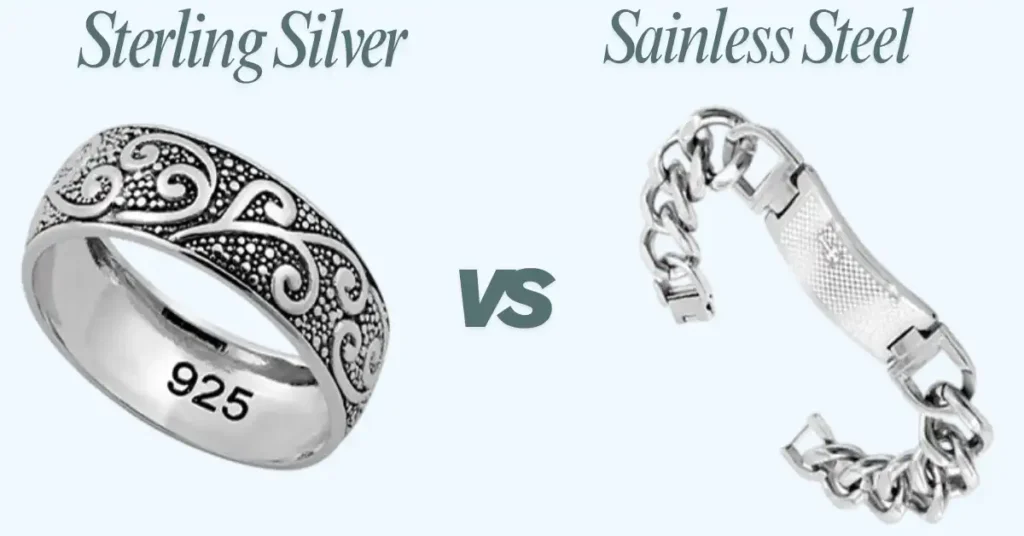
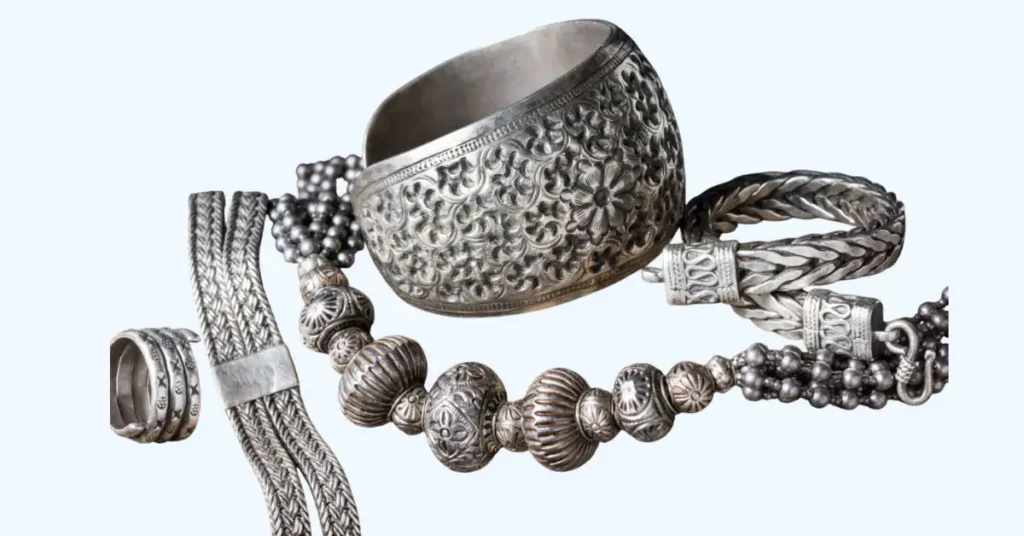
Sterling silver is a precious metal alloy that’s loved for its shine and classic beauty. Pure silver on its own is too soft for jewelry, so it’s mixed with other metals to make it stronger. The standard mix is 92.5% pure silver and 7.5% alloy, mostly copper. This blend is what we call 925 sterling silver. The “925” stamp or hallmark on jewelry confirms this purity.
Because of its bright and reflective surface, sterling silver has been used in jewelry, coins, and decorative items for centuries. It gives a luxurious look at a more affordable price compared to gold or platinum.
However, sterling silver does have a natural downside, it can tarnish over time. Tarnish is a dark layer that forms when silver reacts with air and moisture. The good news is, tarnish can be easily cleaned, and with regular care, sterling silver jewelry can last for generations.
In short, sterling silver is perfect for those who want jewelry with elegance, history, and long-term value. It may need more care than stainless steel, but many people feel its timeless beauty is worth the effort.
What Are the Pros And Cons of Sterling Silver?
Sterling silver is elegant, valuable, skin-friendly, and versatile, a great choice for those who want beauty with lasting worth. It has been loved for centuries, and it’s still one of the most popular metals for jewelery today.
What Are The Pros Of Sterling Silver Jewelry?
Here are the main advantages that make it special:
1. Timeless Beauty
Sterling silver has a bright, mirror-like shine that makes it stand out. Its classic look never goes out of style, which is why it’s used in both modern and traditional jewelry designs.
2. Valuable Precious Metal
Unlike scratch-resistant steel, sterling silver is a precious metal. It holds real value and is often seen as a smart long-term choice. Jewelry made from sterling silver can even be passed down as family heirlooms.
3. Easy to Work With
Silver is softer than stainless steel, which makes it easier for jewelers to craft detailed and artistic designs. This means you’ll find more variety in sterling silver rings, necklaces, and bracelets.
4. Hypoallergenic
Sterling silver is generally safe for sensitive skin, especially when it’s nickel-free. Many people choose it because it doesn’t cause irritation the way cheaper metals sometimes do.
5. Lightweight and Comfortable
Sterling silver jewelry feels light and comfortable to wear. This makes it a favorite for items like earrings or big statement pieces that you might wear for long hours.
6. Versatile Style
It blends well with casual, formal, or luxury outfits. Sterling silver also pairs beautifully with gemstones, gold, or platinum, giving jewelers endless design options.
7. Strong but Repairable
Even though sterling silver is softer than stainless steel, it’s strong enough for daily use. Plus, it can be resized, polished, or repaired easily by jewelers, which adds to its long-term value.
What Are The Cons of Sterling Silver?
It is beautiful and valuable but needs extra care and protection. It’s better for people who want elegance over toughness. While sterling silver has many strengths, it also comes with a few drawbacks you should keep in mind before buying.
1. Tarnishes Over Time
Sterling silver reacts with air and moisture, which causes tarnish—a dark layer on the surface. This means it needs regular cleaning and polishing to keep its shine.
2. Softer and More Delicate
Sterling silver is softer than stainless steel. It can bend, scratch, or get dents more easily, especially with daily wear.
3. Higher Maintenance
Unlike stainless steel, sterling silver requires extra care. You need to store it properly in a dry place and polish it often to prevent dullness.
4. More Expensive
Sterling silver is a precious metal, so it costs more than stainless steel. While affordable compared to gold or platinum, it may not fit everyone’s budget.
5. Not Always Hypoallergenic
Some sterling silver pieces may contain small amounts of nickel or other metals. This can cause irritation for people with very sensitive skin.
6. Less Resistant to Harsh Conditions
Sterling silver can get damaged if exposed to chemicals, salty water, or rough handling. It’s not the best option for heavy daily use or tough environments.
What Is The Main Difference Between Stainless Steel vs Sterling Silver?
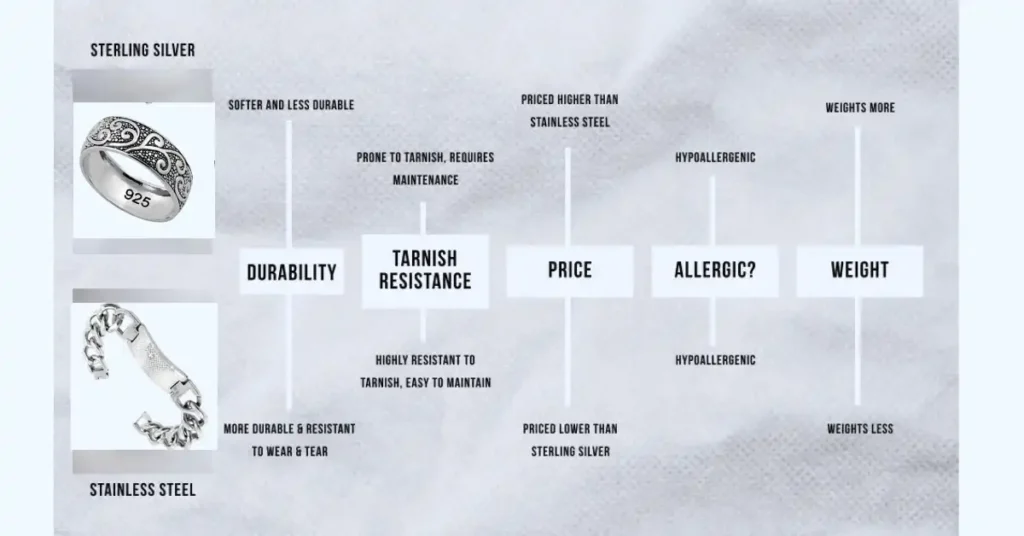
They may look same, but they are very different in use and value. Stainless steel is tough, affordable, and low-maintenance, making it great for daily wear and practical buyers. Sterling silver, on the other hand, is a precious metal with timeless shine and higher value, but it needs more care and costs more.
| Feature | Stainless Steel | Sterling Silver |
|---|---|---|
| Composition and Properties | Made of iron, chromium, and sometimes nickel or molybdenum. Very strong and resistant to rust. | 92.5% real silver mixed with 7.5% copper (925 silver). Softer and more delicate than stainless steel. |
| Durability and Longevity | Extremely durable. Hard to scratch, bend, or break. Can last for decades with little wear. | Extremely durable. Hard to scratch, bend, or break. It can last for decades with little wear. |
| Maintenance and Care | Very low maintenance. Just wipe clean with a cloth or wash with mild soap. | Needs regular polishing to prevent tarnish. Must be stored carefully in dry conditions. |
| Aesthetic Differences | Modern, sleek, and shiny look. Often used in minimalist or bold designs. | Classic, bright, mirror-like shine. Looks elegant and traditional. |
| Hypoallergenic Properties | High-quality grades (316L) are hypoallergenic. Cheaper grades may contain nickel, which can irritate skin. | Usually hypoallergenic, especially nickel-free sterling silver. Safer for sensitive skin. |
| Cost Considerations | Affordable and budget-friendly. Little to no resale value. | More expensive because it’s a precious metal. Holds value and has resale worth. |
| Weight | Heavier than sterling silver, which may feel bulky in large pieces. | Lighter and more comfortable for long wear. |
| Uses in Jewelry | Common in men’s jewelry, watches, bracelets, and fashion accessories. | Popular in rings, necklaces, earrings, and fine jewelry. Often set with gemstones. |
| Flexibility | Very hard, difficult to resize or reshape. | Easier to resize, repair, or reshape due to softness. |
| Identifying Marks | Usually not stamped. May only have “stainless steel” markings. | Marked with “925” or “Sterling” as proof of silver content. |
| Availability | Widely available in modern jewelry stores at low cost. | Common in fine jewelry shops and luxury collections. |
| Light Reflection | Reflects light well but not as bright as sterling silver. | Highly reflective, gives a brilliant shine. |
| Corrosion | Highly resistant to corrosion and rust. | More prone to corrosion when exposed to moisture or chemicals. |
| Tarnish Factor | Does not tarnish. Stays the same for years. | Tarnishes easily, needs frequent polishing to stay bright. |
| Jewelry Hallmarks | May not have hallmarks. Sometimes stamped with “stainless.” | Always stamped with “925” or similar hallmark for authenticity. |
| Appearance and Style | Has a sleek, modern look with a cool gray tone. Often shines with a mirror-like polish but may look less “luxurious.” | Offers a bright, warm white shine that looks classic and elegant. Reflects light beautifully, giving it a premium feel. |
| Differences in Jewelry | Popular for everyday jewelry like rings, bracelets, and men’s accessories due to its toughness and affordability. | Commonly used for fine jewelry, wedding rings, and statement pieces because of its beauty and high value. |
| Differences in Dinnerware | Stainless steel is widely used for cutlery, cookware, and kitchen tools because it resists rust and is durable. | Sterling silver dinnerware is elegant and often seen in luxury settings or as heirlooms, but it needs regular polishing. |
| Gifting Preferences | Stainless steel jewelry is a budget-friendly gift choice, ideal for casual gifting. | Sterling silver is preferred for special occasions like anniversaries, weddings, or milestones because of its value and elegance. |
| Price Differences | More affordable and accessible, making it ideal for budget-conscious buyers. | More expensive due to silver content and craftsmanship, often seen as an investment. |
| Integrating Gold into the Silver Narrative | Stainless steel is rarely plated with gold, but when it is, it creates stylish, affordable fashion jewelry. | Sterling silver is often gold-plated (vermeil) to combine silver’s base with gold’s luxurious look, giving more variety. |
Both stainless steel and sterling silver have unique strengths. Stainless steel is durable, affordable, and low-maintenance, making it ideal for everyday wear and practical buyers. Sterling silver is a precious metal with timeless shine and higher value, but it requires more care and comes at a higher price. The best choice depends on whether you value strength and simplicity or elegance and tradition.
Read our anotther write on full comparison of sterling silver vs white gold and silver vs sterling silver.
Which Has Better Tarnish Resistance: Stainless Steel Versus Sterling Silver?
Stainless steel has far better tarnish resistance than sterling silver. The chromium in stainless steel forms a protective layer that keeps it shiny and rust-free with little effort. Sterling silver, on the other hand, reacts with air and moisture, causing it to tarnish over time, which means it needs regular polishing and care.
Which Is More Hypoallergenic In Sterling Silver vs Stainless Steel?
Stainless steel is generally more hypoallergenic because it resists corrosion and rarely causes skin reactions, especially surgical-grade types. Sterling silver is safe for most people too, but since it’s mixed with other metals like copper, some sensitive skin types may experience irritation or allergies.
How to Tell the Difference Between Stainless Steel and Sterling Silver
If you see 925 stamped on the piece, it’s sterling silver. If it’s heavy, low-cost, and doesn’t tarnish, it’s likely stainless steel. Let’s discuss in some detail.
- Look for Hallmarks – Sterling silver usually has a stamp like “925” or “Sterling”, showing its 92.5% pure silver. Stainless steel rarely has such marks.
- Check the Color – Sterling silver has a warm, bright white shine, while stainless steel has a cooler, greyish tone.
- Test for Tarnish – Silver tarnishes and darkens over time, while stainless steel keeps its shine with little change.
- Magnet Test – Stainless steel may respond slightly to a magnet, but sterling silver will not.
- Weight Difference – Sterling silver is usually lighter than stainless steel jewelry of the same size.
- Price Tag – Sterling silver costs more because it’s a precious metal. Stainless steel is more affordable.
What Are The Tips for Choosing Between Stainless Steel vs Sterling Silver?
Choose stainless steel if you want durability, low cost, and easy care. Pick sterling silver if you value elegance, tradition, and higher long-term value.
- Think about durability – If you want jewelry that can handle daily wear without scratches or tarnish, stainless steel is the better choice.
- Consider your budget – Stainless steel is more affordable, while sterling silver costs more but holds higher resale value.
- Look at appearance – Sterling silver has a warm, classic shine, while stainless steel gives a modern, sleek look.
- Check maintenance needs – Silver requires regular polishing to avoid tarnish, while stainless steel is almost maintenance-free.
- Skin sensitivity – If you have sensitive skin, surgical-grade stainless steel is the safest. Sterling silver is usually safe too, but the added metals (like copper) may irritate some people.
- Purpose of use – For fashion jewelry and daily accessories, stainless steel is practical. For gifts, heirlooms, or luxury pieces, sterling silver is more meaningful.
- Weight preference – Stainless steel feels heavier, while sterling silver is lighter and more comfortable for delicate jewelry.
- Longevity vs. tradition – Stainless steel offers long-lasting shine, while sterling silver carries tradition and prestige.
Which is Better for Jewelry: Stainless Steel Vs Sterling Silver?
Choose stainless steel for durability and daily wear, but go with sterling silver for beauty, tradition, and long-term value. For everyday jewelry, stainless steel is better because it’s sturdy, scratch-resistant and does not tarnish. You can wear it daily without tension about damage or constant cleaning.
For special jewelry pieces like gifts, heirlooms, or luxury items, sterling silver is better. It has a timeless shine, carries more value, and feels more elegant.
Conclusion – 925 Silver Or 316L Stainless Steel
Both stainless steel and sterling silver have their own strengths. Stainless steel is tough, affordable, and easy to care for, making it perfect for daily wear. Sterling silver, on the other hand, brings timeless beauty, prestige, and higher value, but it needs more maintenance.
The best choice depends on what you’re looking for. For worry-free, practical jewellery, opt for stainless steel. If you prefer elegance and tradition with lasting value, sterling silver is the better pick.
In the end, there’s no single winner, only the metal that matches your style, budget, and lifestyle.
FAQs Related To Stainless Steel Or Sterling Silver
What’s better, stainless steel or sterling silver?
Stainless steel is better for durability, while sterling silver is better for elegance. Stainless steel is strong, affordable, and low-maintenance. Sterling silver offers timeless shine and value but needs more care.
Is stainless steel jewelry good?
Yes, it’s durable and low-maintenance. Stainless steel jewelry resists scratches and tarnish, making it perfect for everyday wear. Another good point it’s budget-friendly compared to precious metals.
What lasts longer, silver or stainless steel?
Stainless steel lasts longer. It doesn’t tarnish or corrode easily, even with daily use. Sterling silver can also last a lifetime, but only with proper polishing and storage.
Is stainless steel the same as 925?
No, they’re completely different. 925 means sterling silver, made of 92.5% pure silver. Stainless steel is a mix of steel, chromium, and other metals, with no silver in it.
Is stainless steel real silver or fake?
It’s not silver at all. Stainless steel is its own alloy and doesn’t contain silver, so it’s not “fake,” just a different material. It’s valued for strength, not preciousness.
Can I wear stainless steel in the shower?
Yes, it’s safe. Stainless steel is waterproof and won’t rust or tarnish in water. Just avoid strong chemicals like chlorine to keep it shiny for longer.
What are the allergy concerns and differences between sterling silver vs stainless steel?
If you have very sensitive skin, surgical stainless steel is the safer choice, while sterling silver works well for most people but may cause issues for a few.
When it comes to allergies, stainless steel, especially surgical-grade, is usually safer. It resists corrosion and doesn’t release metals that often trigger skin reactions. That’s why it’s widely used in medical implants and body jewelry.
Sterling silver is mostly hypoallergenic too, but since it’s mixed with copper or other metals, some people with sensitive skin may develop irritation or rashes.
Stainless Steel vs. Sterling Silver For Sensitive Ears?
For highly sensitive ears, go with surgical stainless steel earrings. If you want a more elegance. If you have sensitive ears, stainless steel (surgical-grade) is usually the safer option.
It resists corrosion, does not tarnish, and rarely causes allergic reactions, making it great for everyday earrings.
Sterling silver is generally safe too, but since it’s mixed with copper, some people with sensitive skin may feel irritation or redness after wearing it.