Jewelry can be beautiful, but choosing the right type can be confusing. You often hear terms like rhodium plated vs sterling silver, and wonder how to distinguish them. At first, both shine with the same bright finish, and both look stylish. But when you wear them daily, they don’t perform the same. One may be more durable, while the other may tarnish faster. One might be safer for sensitive skin, while the other could irritate if not cared for properly. And of course, price also plays a big role.
If you’ve ever asked yourself which one lasts longer, which is easier to maintain, or which is worth the money, you’re not alone. Many jewelry lovers face the same choice, especially when shopping for rings, necklaces, or bracelets. In this guide, we’ll break down the differences between rhodium-dipped jewelry and 925 silver.
What is Rhodium Plated Jewelry?
Rhodium plated meaning a jewelry made by coating metals like sterling silver or white gold with a thin layer of rhodium. This gives the piece a bright, shiny finish and adds protection against scratches and tarnish. The coating makes jewelry look more polished, but it can wear off over time and may need re-plating.
What Are The Pros and Cons of Rhodium Plated Jewelry?
| Pros | Cons |
|---|---|
| Very shiny and reflective finish | Thin layer can wear off over time |
| Resists scratches and tarnish | Needs re-plating with regular use |
| Looks more expensive and polished | Can be more costly than plain sterling silver |
| Safe for sensitive skin (when intact) | Base metal shows once plating fades |
What is Sterling Silver?
Sterling silver is a unique metal used in jewelry. It is made of 92.5% pure silver mixed with 7.5% alloy, mostlycopper. This mix makes it stronger than pure silver, which is too soft for everyday wear.
Sterling silver has a brilliant, natural shine and is widely used in rings, necklaces, earrings, and silverware. However, it can tarnish over time when it comes into contact with air, water, or chemicals. With regular cleaning and care, sterling silver jewelry can last for many years.
What Are The Pros and Cons of Sterling Silver?
| Pros | Cons |
|---|---|
| Strong and durable for daily wear | Can tarnish when exposed to air or water |
| More affordable than gold or platinum | Needs regular cleaning and care |
| Natural, classic silver shine | May cause skin irritation for some people |
| Easy to repair and resize | Softer than some metals, can scratch |
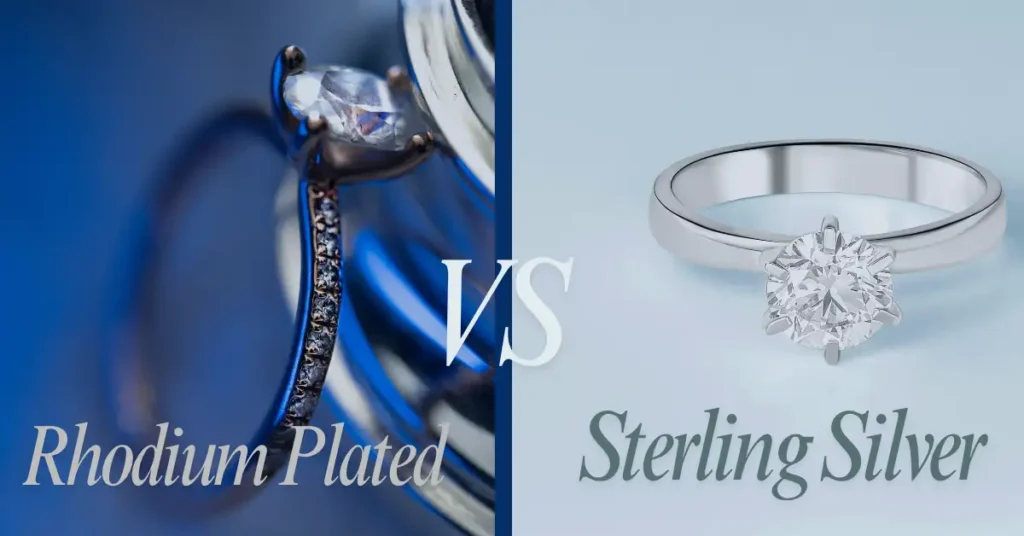
Rhodium Plated Vs Sterling Silver: What Is The Difference?
When it comes to choosing between jewelry plating and sterling silver, the answer depends on what you value most—cost, durability, look, or skin safety. Let’s break it down.
The Cost
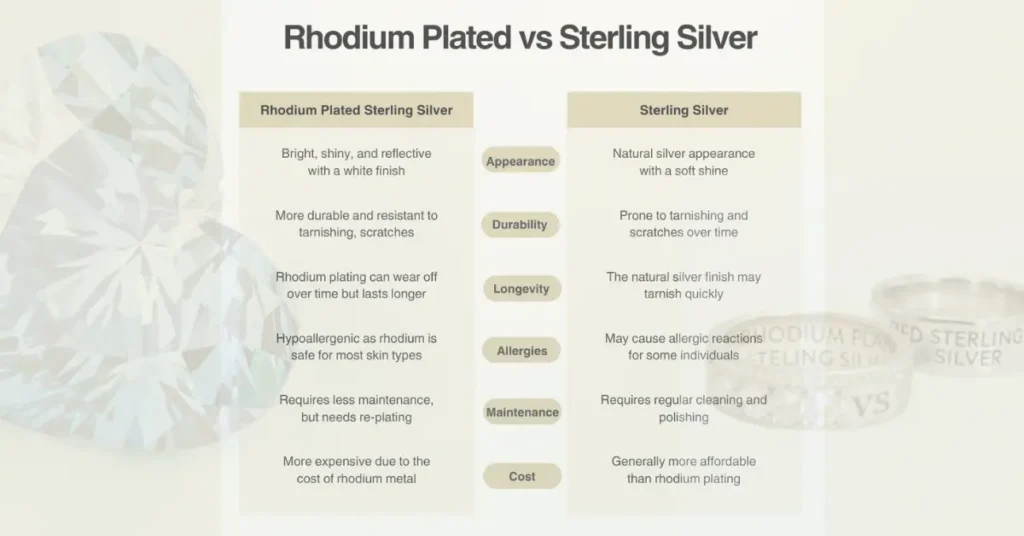
Sterling silver is generally more affordable. Rhodium silver can be pricier because of the extra plating process and the rare metal used.
Appearance and Reflective Property
Rhodium plated pieces have a brighter, mirror-like shine that looks very polished. Sterling silver has a softer, natural glow but can darken over time without cleaning.
Compositions and Properties
Sterling silver is made of 92.5% pure silver combined with 7.5% alloy. Rhodium-coated jewelery is usually sterling silver or white gold coated with a thin rhodium layer.
Durability
Rhodium plating makes jewelry more resistant to scratches and tarnish, but the layer can wear off. Sterling silver is sturdy but softer, meaning it can scratch and tarnish faster.
Hypoallergenic Properties
Rhodium is hypoallergenic, that’s why it’s safe for sensitive skin, at least while the plating lasts. Sterling silver is mostly safe, but the small amount of other metals (like copper or nickel) may cause irritation in some people.
Purity
Sterling silver is 92.5% pure silver, giving it a higher natural silver content. Rhodium-finished jewellery has less purity since it’s just a coating over another metal.
Clarity
Rhodium electroplated pieces always look bright, shiny, and uniform in color. Sterling silver can lose clarity over time due to tarnish, but polishing restores its natural glow.
What Are The Similarities In Rhodium-Plated and 925 Silver Jewelry?
Rhodium-plated and 925 sterling silver jewelry may look different at first, but they share many common traits:
- Base Metal: Most rhodium-plated jewelry is made with sterling silver as the base.
- Appearance: Both have a bright silver shine that looks elegant and stylish.
- Uses: Commonly used in rings, necklaces, earrings, and bracelets.
- Maintenance: Both need care to keep their shine—rhodium requires re-plating, while sterling silver needs polishing.
- Popularity: Affordable compared to gold and platinum, making them popular everyday choices.
Which Is Better, 925 or Rhodium-Plated Jewelry?
The choice depends on your needs. If you want a natural, classic metal that can last for generations, 925 sterling silver is a better option. It has more silver content, is durable, and can be polished back to shine.
If you prefer a bright, mirror-like finish that resists scratches and looks more polished, rhodium-plated jewelry may be the right choice. However, the rhodium layer will wear off over time and need re-plating.
In short, choose sterling silver for long-term value and tradition, and rhodium-plated jewelry if you want a high-end finish with a modern look.
Quick Comparison
| Feature | 925 Sterling Silver | Rhodium-Plated Jewelry |
|---|---|---|
| Purity | 92.5% silver + 7.5% other metals | Thin rhodium layer over silver/other |
| Look | Natural silver shine | Bright, mirror-like finish |
| Durability | Strong but can tarnish/scratch | Tarnish-resistant but plating wears off |
| Maintenance | Needs polishing | Needs re-plating |
| Cost | More affordable | Slightly more expensive |
| Best For | Long-term value, tradition | High-end finish, modern style |
What Are The Care and Maintenance Tips For Sterling Silver Vs Rhodium Plated?
Both sterling silver and rhodium-plated jewelry need proper care to stay shiny and last longer. Here’s how to handle each:
Caring for 925 Sterling Silver
- Store pieces in a dry, airtight bag to prevent tarnish.
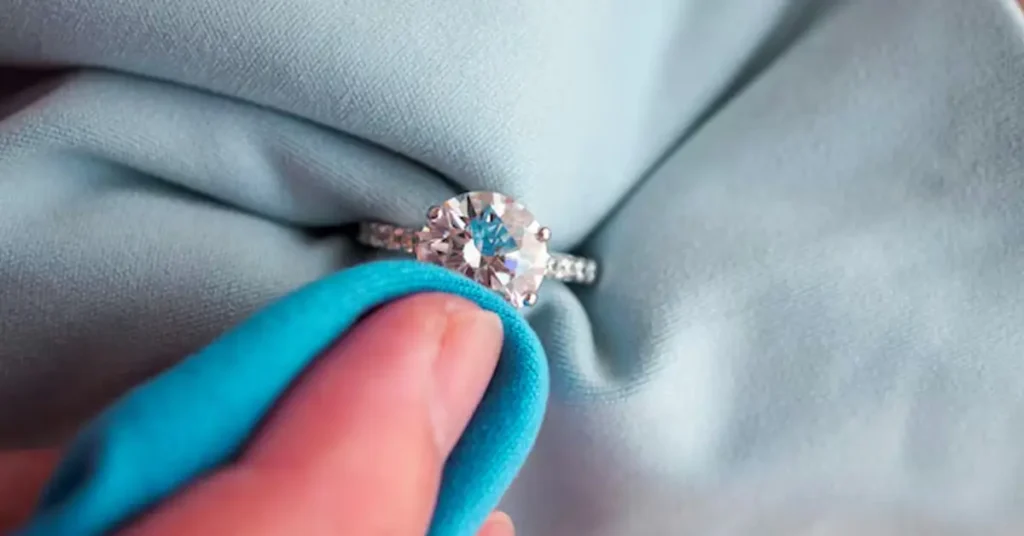
- Clean regularly with a soft polishing cloth.
- Avoid harsh chemicals, perfumes, and water exposure.
- For heavy tarnish, use a silver cleaning solution or get it professionally cleaned.
Caring for Rhodium Plated Jewelry
- Keep away from harsh cleaners, lotions, and perfumes, as they can wear off the plating.
- Gently wipe with a soft cloth after wearing to remove oils and sweat.
- Avoid wearing during heavy activity or swimming.
- Re-plate every few years if the shine fades or the base metal shows.
How To Choose the Right Option for Your Jewelry Line?
When building a jewelry collection, the right material depends on your style, budget, and customers. Both sterling silver and rhodium-plated jewelry have unique strengths. Here’s how to decide:
Your Design And Style
If your designs focus on a classic, timeless look, sterling silver is a strong choice. It has a natural glow and works well for traditional pieces.
If your designs lean toward a modern, polished finish, rhodium plating adds extra shine and a luxury feel.
Your Budget
Sterling silver is usually more affordable and easier to source. It’s a good option if you want to offer quality pieces at a lower price.
Rhodium-plated jewelry costs more because of the rare metal and extra process, but it can appeal to customers looking for a high-end touch.
Customer Preference & Target Market
For customers who value long-term durability and heritage, sterling silver will always have appeal.
For customers who want bright, shiny jewelry that looks premium, rhodium plating may be the better fit.
Conclusion – Rhodium Plated Vs Sterling Silver
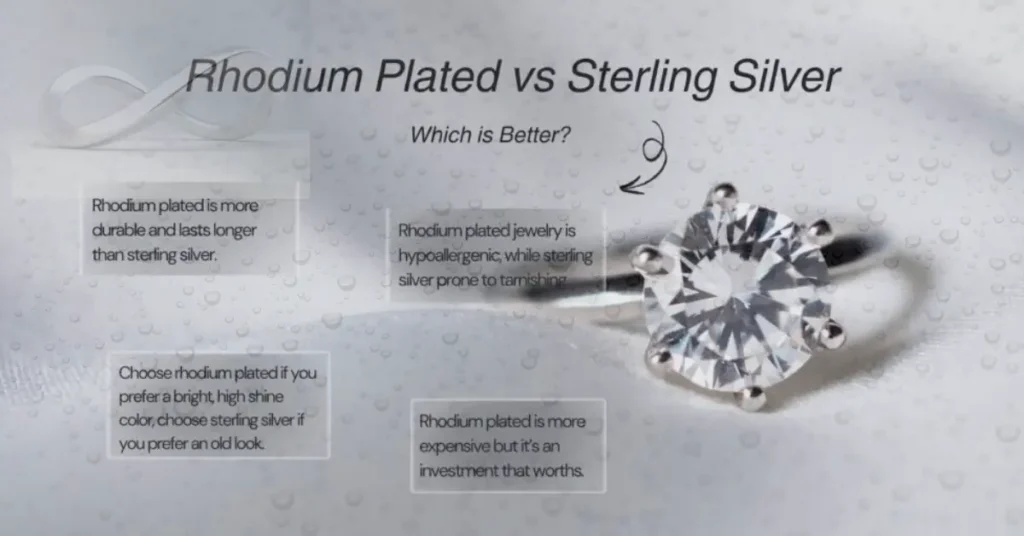
Both rhodium plated jewelry and 925 sterling silver have their own strengths. Sterling silver offers tradition, long-term value, and natural beauty, while rhodium plating delivers a bright, modern finish with extra protection. The best possibility depends on your style, budget, and the level of maintenance you’re willing to do.
If you want a timeless piece that can be polished and cherished for years, go with sterling silver. If you prefer a high-end shine that stands out right away, rhodium plating may be the better fit. In the end, both metals bring elegance, making them excellent choices for everyday wear or special occasions.
FAQs – Rhodium Plated Vs Sterling Silver
Does rhodium plated silver tarnish?
Rhodium plating does not tarnish like regular silver. The coating acts as a protective layer that keeps the jewelry shiny and bright. However, once the plating wears off, the silver underneath can tarnish. That’s why re-plating may be needed over time.
Is rhodium more expensive than silver?
Yes, rhodium is more expensive than silver. It is a rare metal from the platinum family, and its price is usually higher. That’s why rhodium plating adds extra cost to jewelry compared to plain sterling silver.
How long does rhodium plated sterling silver last?
Rhodium-plated 925 silver can last from several months to a few years, depending on how often the jewelry is worn. Rings and daily wear pieces lose the coating faster than earrings or necklaces. With good care, the shine can last longer before re-plating is needed.
What are the disadvantages of rhodium plating?
The main drawback is that the plating wears off over time, especially on jewelry you wear daily. It also cannot be polished once it fades—you need to re-plate it. In addition, rhodium-plated jewelry is more expensive than plain sterling silver.
Is sterling silver or rhodium better?
Sterling silver is better for long-term value because it’s solid and can be polished back to shine. Rhodium is better if you want a bright, mirror-like finish that resists tarnish. The choice depends on whether you prefer tradition and durability (silver) or a premium, modern look (rhodium).
Is rhodium worth buying? Why would people choose rhodium over sterling silver?
Yes, rhodium plating is worth buying if you want jewelry with a bright, luxury finish. People often choose it because it resists tarnish, looks more polished, and feels high-end. It’s also a good option for those with sensitive skin since rhodium is hypoallergenic.
Why isn’t rhodium used in jewelry more?
Rhodium is not used to make entire jewelry pieces because it is very rare, brittle, and hard to work with. Instead, it’s used as a thin plating over metals like silver or gold. Making full jewelry pieces with rhodium would be too costly and not practical.